
What to bring to your first interior design conversation
A floor plan helps. So do half-formed references, daily annoyances and honest budget boundaries. You don’t need to arrive with everything figured out.
6 min readYour first conversation with an interior designer doesn’t need to feel like a formal consultation.
You don’t need a complete moodboard, a perfectly calculated renovation budget or a detailed list of every cabinet you want built.
Sometimes, the best place to start is simply a conversation about how you live now, what isn’t working, and what you hope could be better.
Here are a few things that can help.
Start with whatever information you already have
If you have them, bring along whatever information is already within reach.
You don’t necessarily need all of it. A floor plan might help us understand the space, while a few photographs may reveal things that aren’t obvious on a drawing. Even an unfinished list of requirements gives us somewhere to begin.
The point isn’t to arrive perfectly prepared.
- 01 /Floor plan
- 02 /Existing photos
- 03 /Timeline
- 04 /Budget
- 05 /References
- 06 /Requirements
Bring what you have.
We’ll find the questions together.
Tell us about your life, not just your preferred style
One of the most useful things you can tell your designer has nothing to do with whether you prefer Japandi, contemporary or mid-century interiors.
Tell us how you actually live.
“What frustrates you about your current home?”
- Do you constantly run out of storage?
- Is your kitchen too small for the way you cook?
- Do you entertain often?
- Do certain spaces rarely get used?
- What do you definitely not want to repeat?
Do I actually have enough storage right now?
What do I wish my next home would do better?
Design starts with how you live.
Not with what style you searched for.
Bring references, but don’t try to recreate them
Bring two images.
Bring twenty.
There isn’t really a correct number. What matters more is being able to tell us what you like about them.
You don’t even need to know the design terminology. Pointing at something and saying “I like how this feels” is already useful.
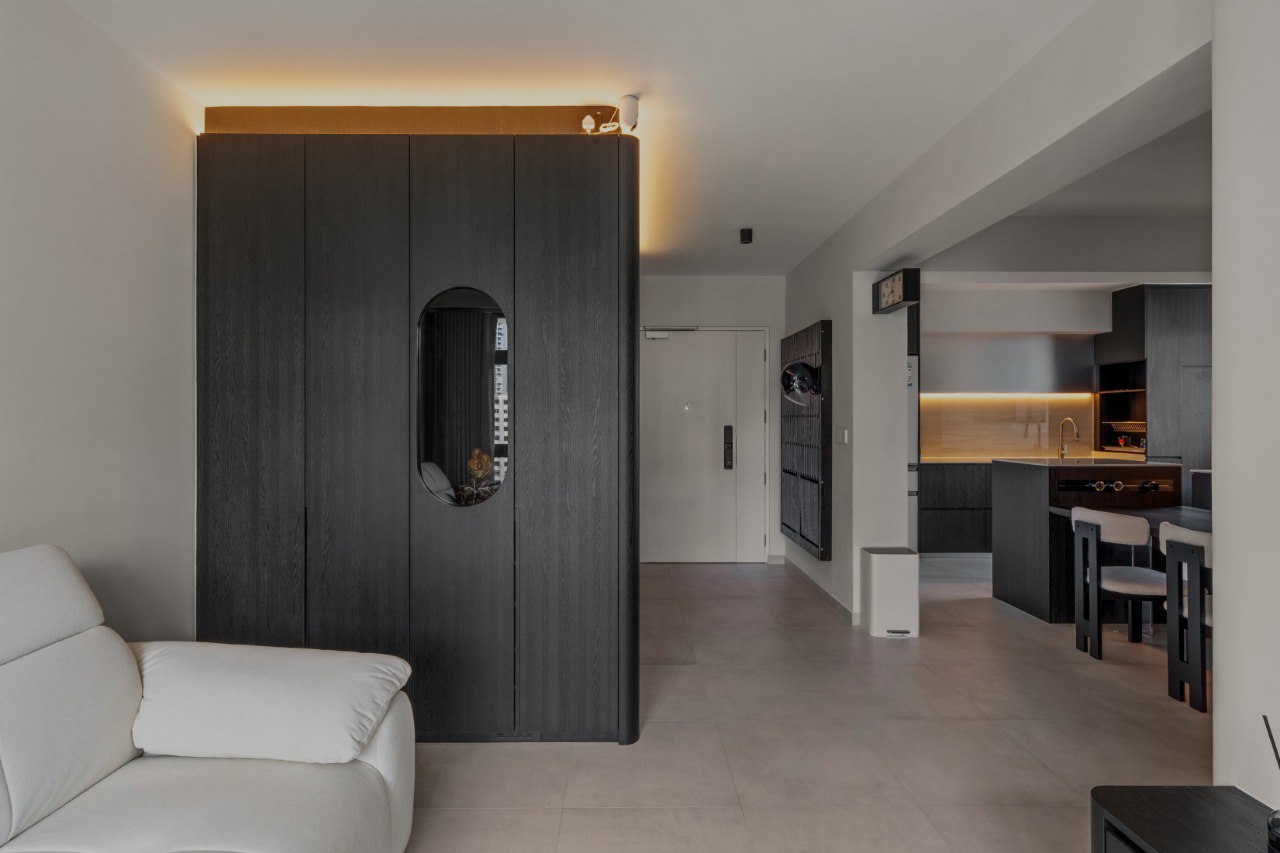


the openness ↗
A beautiful room online was designed around someone else’s floor plan, lifestyle, priorities and constraints.
Your home shouldn’t become a replica of somebody else’s. We would rather understand the essence of what attracted you, then reinterpret it around the way you live.
- Colour
- Contrast
- Lighting
- Mood
- Furniture placement
- Empty space
- Material
- Proportion
- How it feels
Have a budget range, even if it isn’t exact
You don’t need to know exactly what your renovation will cost before meeting a designer. But having a realistic range helps tremendously.
“We’re hoping to keep the renovation somewhere around $40,000–$50,000.”An example of how to communicate a boundary—not a package price.
There is nothing wrong with wanting both function and aesthetics—most homeowners do. But expectations, scope and budget still need to meet somewhere.
Knowing your priorities earlier lets us make decisions deliberately, instead of discovering the compromises halfway through the renovation.
You don’t need to know what you want yet
Perhaps the most important thing to bring to your first meeting is simply an open conversation. You are not expected to know the solution. That’s part of why you’re speaking to a designer.
You might know exactly what you want. You might have a vague collection of Pinterest images. Or you might walk in saying:
“I actually have no idea where to begin.”
That’s a perfectly good place to start.
Our job isn’t simply to ask what colour you want the cabinets to be and start drawing them. The first conversation is about understanding your lifestyle, preferences, frustrations, priorities and the possibilities within the space. From there, the design can begin to take shape.
A good place to begin
Come with a floor plan.
Or just come with questions.
A good first design conversation shouldn’t feel like you’re sitting for an interview. Bring what you have, tell us what you know, tell us what you’re unsure about—and we’ll work through the rest together.
“I don’t really know what I want yet, but I know what isn’t working.”That is more than enough to start.
Start with your floor plan
Have a home you’re thinking about renovating?
Send us your floor plan and tell us a little about how you want to live. We’ll start from there.
Start with your floor plan ↗