
How to choose finishes
for a life,
not a showroom
A useful way to think about touch, maintenance, ageing and mood before falling for a sample under perfect lighting.
9 min readMaterial selection is usually one of the most enjoyable parts of designing a home.
You see a beautiful stone. Run your hand across a textured laminate. Hold two timber samples beside each other. Find exactly the right shade of grey.
And suddenly, the home starts to feel real.
But this is also where one of the easiest design mistakes happens: we choose a material based on how it looks before anyone has actually lived with it.
A showroom sample is clean. Perfectly lit. Untouched.
Your home won’t stay that way. And it shouldn’t have to.


Do I like this?
Am I comfortable
living with this?
Appearance is only the first layer
Appearance is only
the first layer.
A finish isn’t just something you look at.
You touch it, lean against it, open it, close it, cook beside it, spill things on it, clean it, drag luggage across it and expose it to sunlight.
Then you repeat all of that for years. That changes the material conversation quite a bit.
How often
will you
interact with it?
- 01
Feature wall
Low-touch
Mostly visual
Easy to appreciate
Less frequent cleaning
- 02
Kitchen cabinet
High-touch
Grease
Fingerprints
Repeated cleaning
Dust in texture
The material didn’t change.
The context did.
Singapore conditions
The showroom
isn’t your home.
Singapore homes bring another set of conditions. Humidity, moisture, strong sunlight, wet areas, cooking, service yards, bathrooms and windows receiving afternoon sun.
Good for
what?
The showroom never shows you Tuesday night
The showroom
never shows you
Tuesday night.
Everything looks good when it’s new.
The more useful question is what happens after normal life begins.
Dark matte surfaces
Beautiful in a quiet place.
More demanding in a high-touch one.
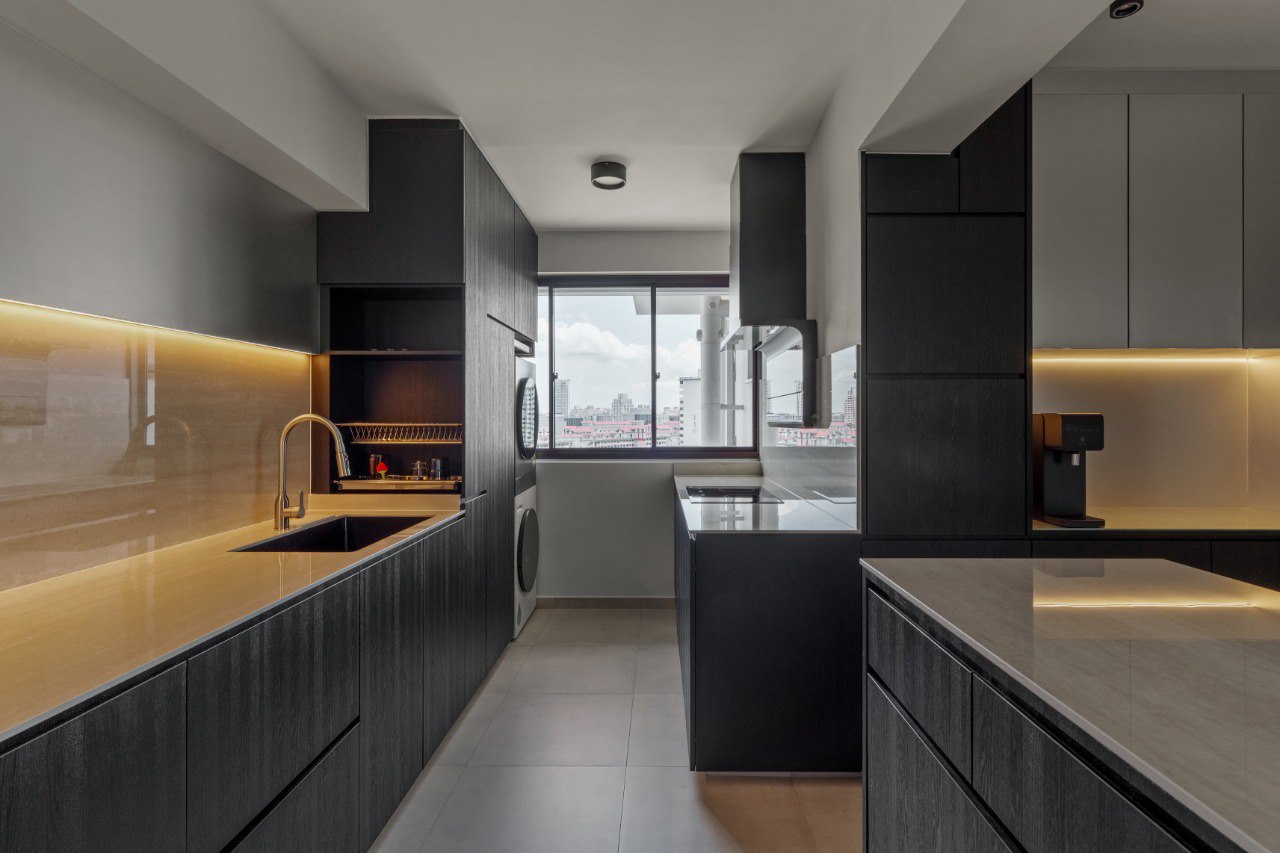
Dark laminates and painted finishes can create beautiful depth and photograph extremely well. They can also show fingerprints, oil marks, dust and wiping streaks.
High-gloss finishes
The thing that makes it shine also makes imperfections easier to see.
Gloss reflects light. That’s part of why it can feel luxurious. It can also reveal fingerprints, fine scratches, grease and surface unevenness.
Dark bathroom tiles
Not “will dirt show?”
What kind of marks will this surface show?
Dark does not automatically mean low maintenance. Water marks, soap residue and mineral deposits may be more noticeable on certain dark matte tiles.
Natural stone
You don’t choose natural stone because it behaves like porcelain.
Natural stone offers variation, depth and individuality. Depending on the material, it may stain, etch, absorb moisture, vary between slabs and change subtly over time.
White grout
Not every practical choice needs to look practical.
White grout can look incredibly crisp when freshly completed. In bathrooms, kitchens and heavily used flooring, it may not remain perfectly white forever. A slightly more forgiving tone can age more quietly.
Textured finishes
Texture isn’t the problem. Placement is the decision.
Fluted panels, deep grain, embossed laminates and grooves create depth because light creates shadow. The trade-off is cleaning.
Timber
Change does not always mean defect.
Real timber changes. It responds to sunlight, its tone can deepen, and covered and exposed areas may age differently. That is part of its character.
Some materials age. Others deteriorate.
Some materials age.
Others deteriorate.
We generally prefer homes that can age gracefully rather than depending on everything remaining flawless.
A home is meant to be used.
Honest ageing. The material isn’t pretending nothing happened. It simply continues to look like itself.
Ageing
Timber deepening
Metal darkening
Stone variation
Natural patina
Deterioration
Swelling
Peeling
Delamination
Failure
When this material changes,
will it develop character —
or simply look worn out?
The more visually perfect something is designed to look, the more obvious every future imperfection becomes.
Perfection has a
maintenance cost too.
Natural texture, tonal variation and material depth often give everyday life somewhere to disappear.
A good home
should be allowed
to look lived in.
Timelessness isn’t about keeping a home frozen on renovation handover day.
It’s about choosing materials and compositions that still feel appropriate after normal ageing has happened.
A beautiful sample can still be wrong
A beautiful sample
can still be wrong.
A laminate isn’t used by itself. Neither is a tile, countertop or paint.
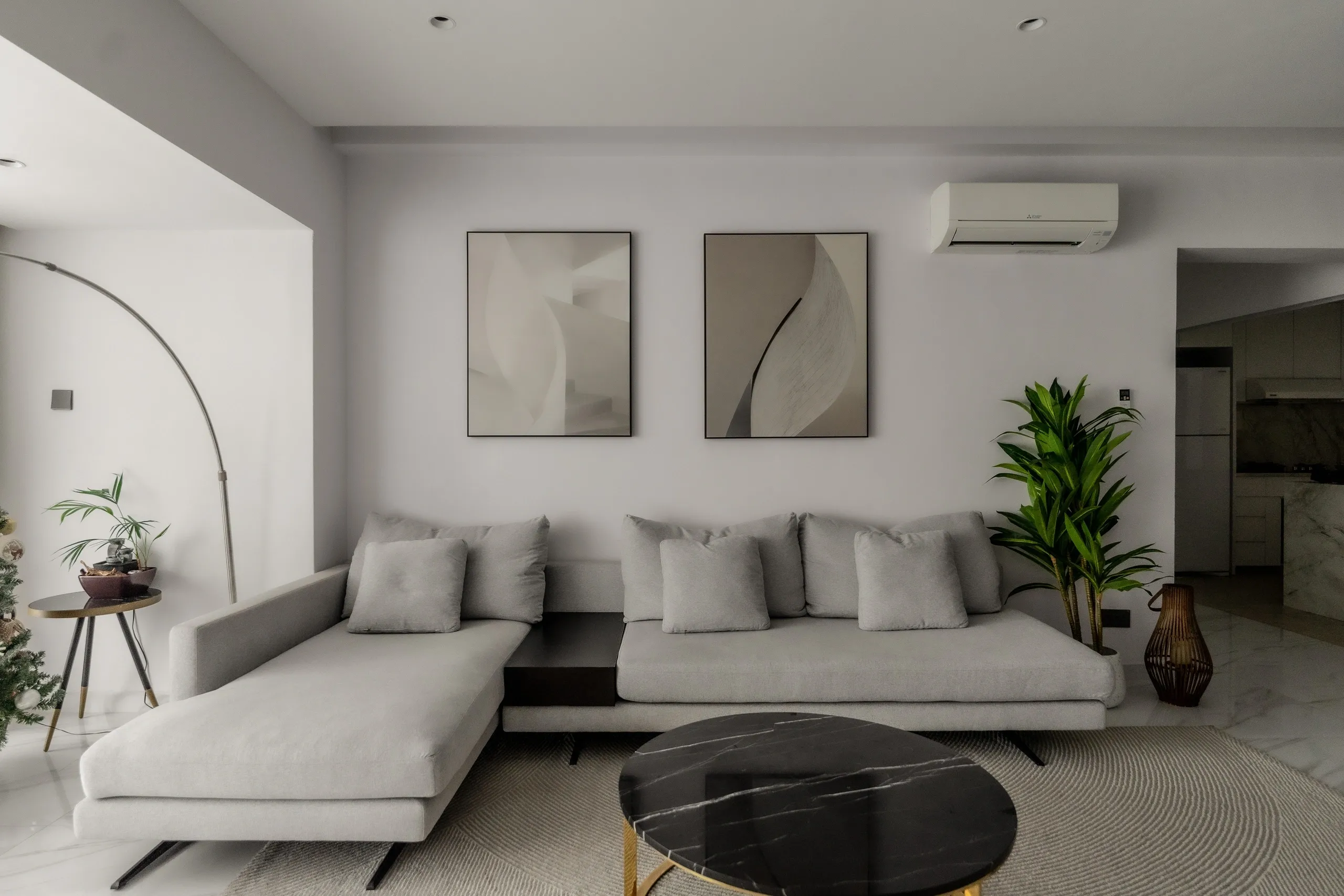
Everything sits beside something else. Material selection is really a problem of composition.
 Hero material
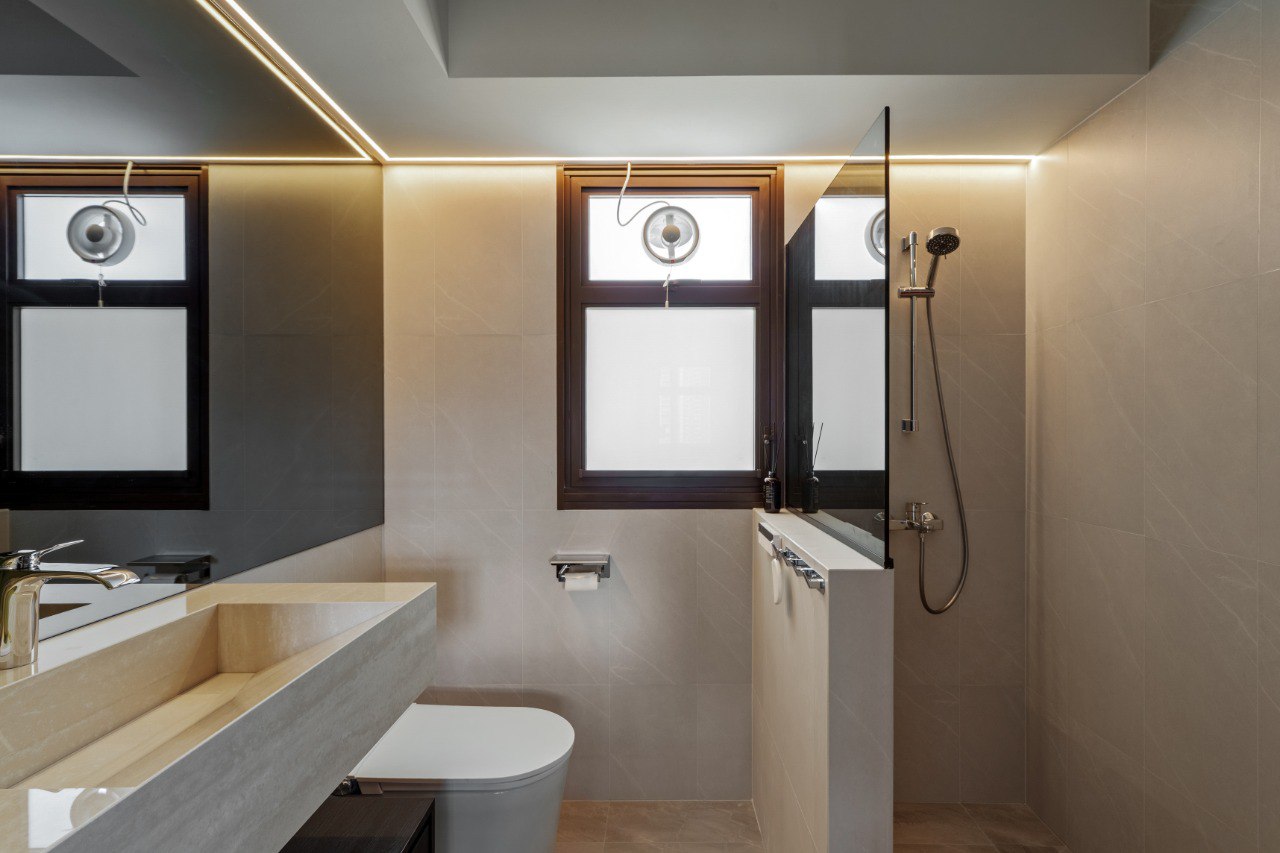
A material doesn’t have one identity.
Its neighbours change how you read it.
Light participates
Colour doesn’t exist alone.
Light participates.
If every material is shouting, nothing feels important.
You’re not designing the sample.
You’re designing the room.
Soft / Warm / Tactile
Timber
Fabric
Textured plaster
Softer stone
Crisp / Graphic / Precise
Metal
Glass
Polished stone
Sharp contrast
Materials don’t only change how a home looks.
They change how it feels.
Lifestyle · The final filter
Cook every day?
Young children?
Pets?
Entertain often?
Travel frequently?
Low-maintenance priority?
Heavy-use kitchen?
Quiet home?
Same material.
Different household.
Different decision.
“This sample is beautiful.
But I wouldn’t use it here.”
Not because the material is bad. Because the location is wrong.
Five questions before choosing a finish
- 01
What will touch it?
Hands? Feet? Water? Oil? Furniture? Pets?
- 02
How often?
Once a month? Or fifty times a day?
- 03
What will it look like when it isn’t perfectly clean?
Fingerprints? Dust? Water spots? Stains? Scratches?
- 04
How will it change?
Patina? Colour shift? Natural variation? Or deterioration?
- 05
Does it belong with everything around it?
Light? Floor? Cabinetry? Stone? Room size? Lifestyle?
If the answers still make sense,
you’re probably looking at the right material.
Choose the home,
not the sample.
A designer’s job isn’t to collect as many beautiful materials as possible. It’s knowing which ones deserve to be used.
Where they should go. How much of them the room needs. What should sit beside them. And whether the homeowner will still enjoy living with them after the excitement of renovation has passed.
The right material
supports the design.
Survives the lifestyle.
And ages without losing its place in the home.
Building your material palette?
Start with the home,
not the sample.
Send us your floor plan and tell us a little about how you live. We’ll help you think about materials in the context of the space, the light, the maintenance and the way the home will actually be used.
Start with your floor plan ↗